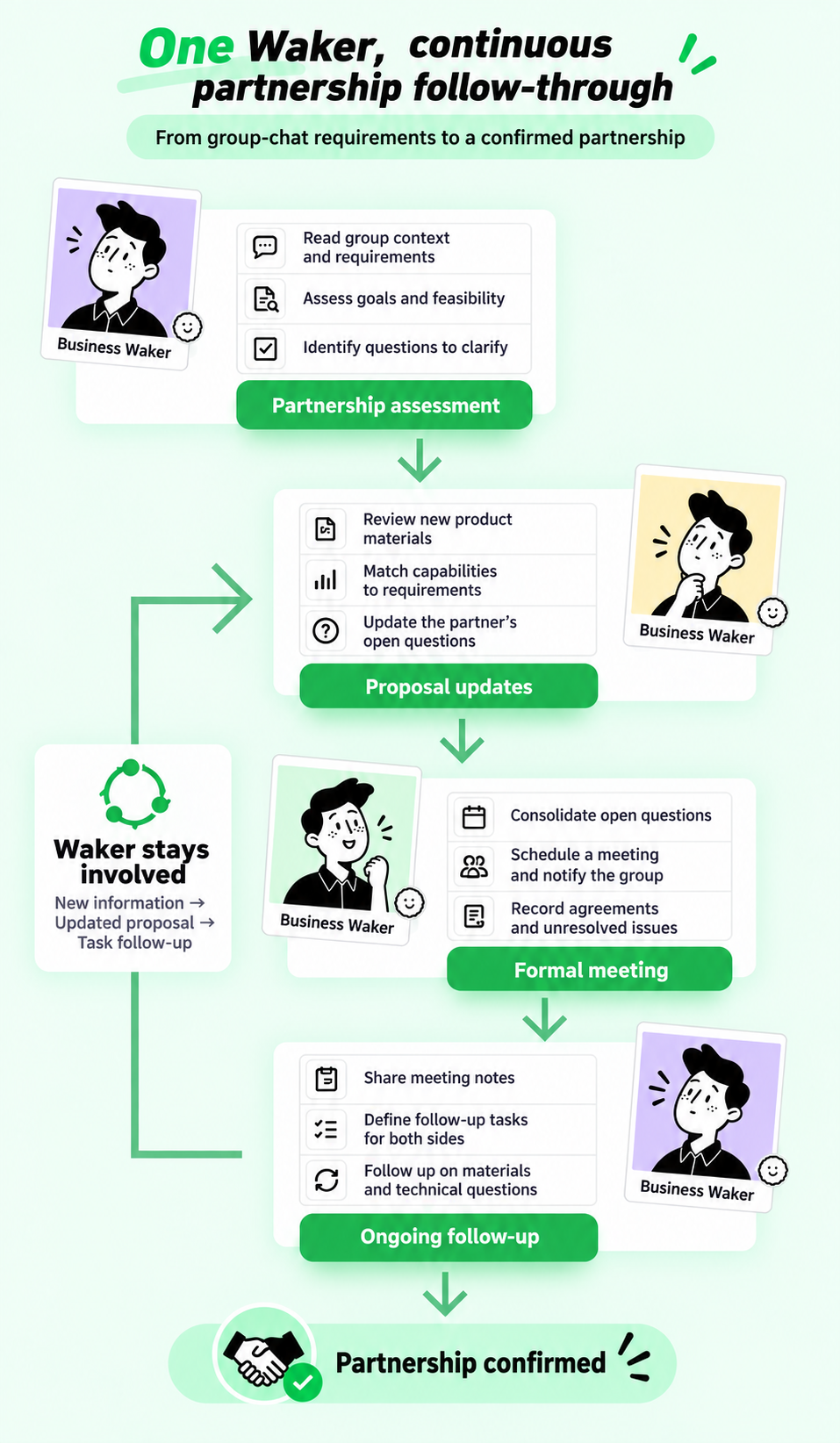
From a requirement in a group chat to a confirmed partnership: how Waker kept assessments, meetings, and follow-up work moving.
First, assess whether there is a basis for collaboration
The prospective partner was planning a new system for advertising engineering and development.
The idea was for users to submit goals through the web or DingTalk. Digital employees would receive the requests, clarify questions, call the relevant development systems to complete tasks, and deliver results that could be checked and traced.
The direction was taking shape, but the partner was still evaluating whether QoderWake was a suitable fit, how much the existing capabilities could cover, and what the two sides still needed to resolve.
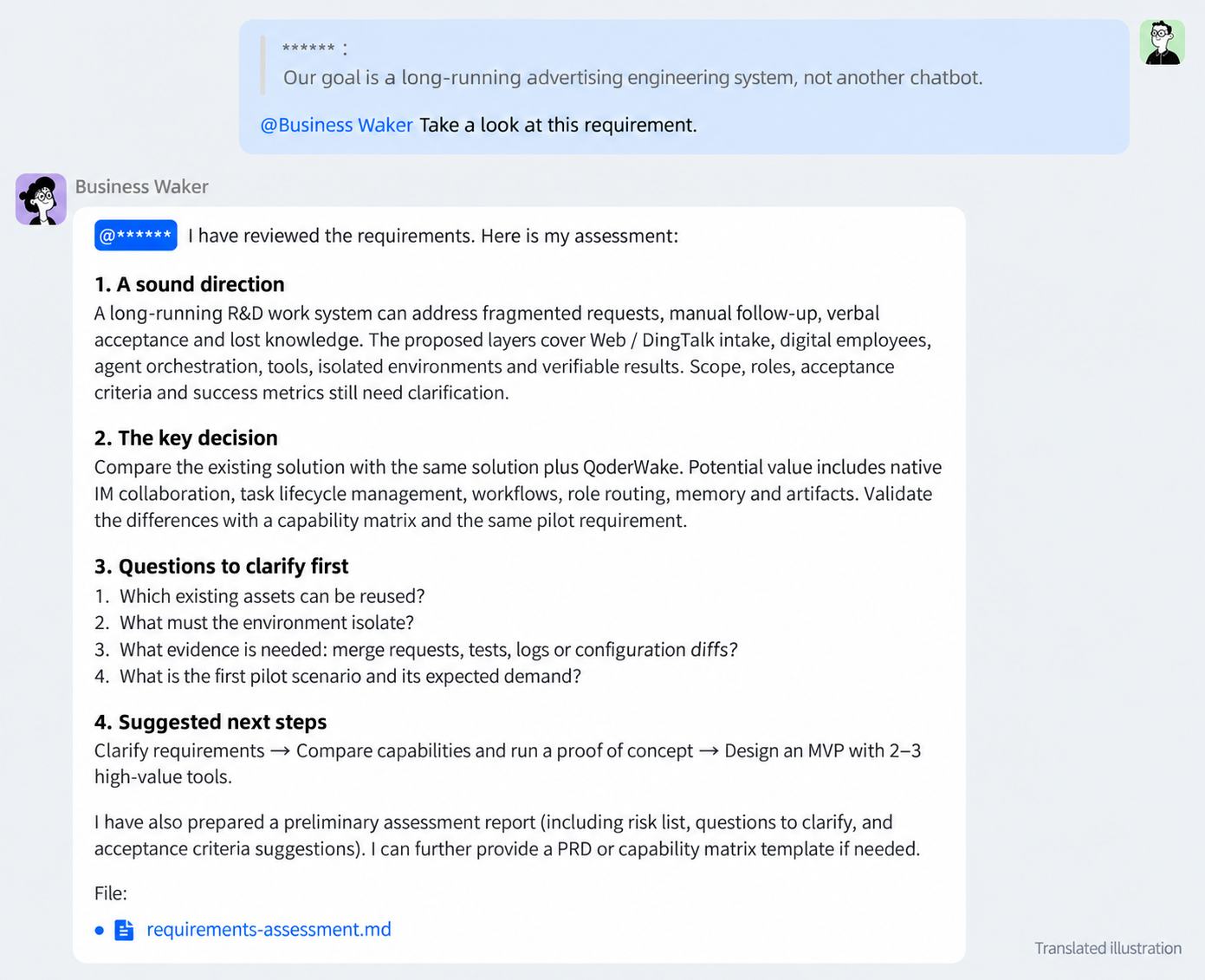
The partner shared requirements and an initial architecture in the coordination group. With the requirements still under discussion, the team did not rush to give a general “yes” or send a standard product introduction. Instead, they handed the task directly to Waker:
“Take a look at this requirement.”Drawing on the group’s conversation and the partner’s materials, Waker broke down the requirements and produced a structured assessment. The assessment did not decide on the partnership for either side. It first organized a few key questions:
- What system was the partner actually trying to build?
- Where did QoderWake’s existing capabilities match the requirements?
- Which capability boundaries still needed confirmation?
- What questions should the two sides discuss next?
English translation of the source conversation, recreated for readability.
Update the proposal as new material arrives
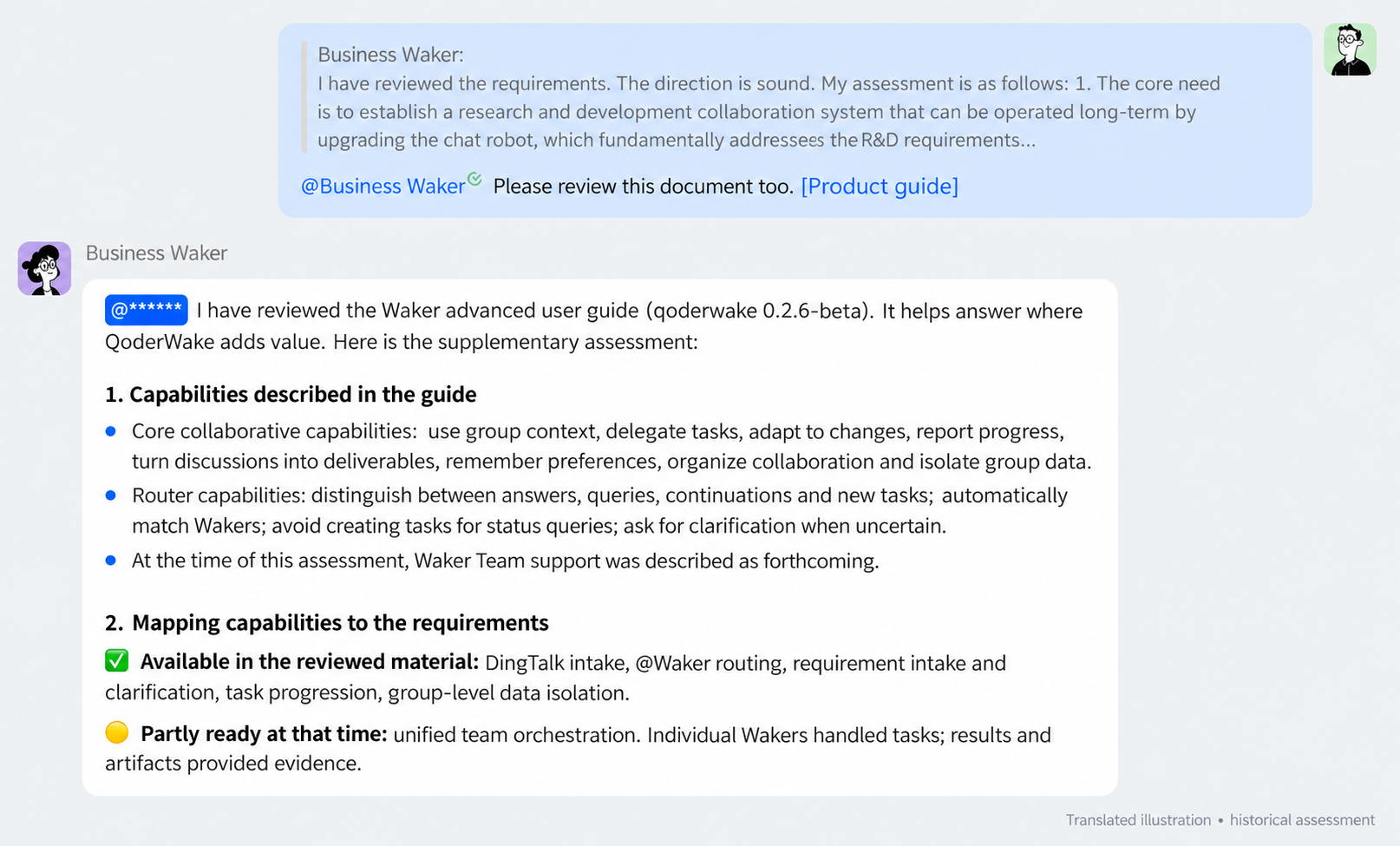
After the first assessment, the team shared additional QoderWake product documentation in the group.
Waker continued from the existing collaboration context and assessment, updating the proposal rather than starting an isolated question-and-answer exchange.
This update focused on the partner’s two main concerns:
- Which requirements could the current product already meet?
- How did QoderWake differ from the other options, and where did it offer advantages?
English translation of the source conversation. Capability status reflects the assessment at that time.
Move questions that need deeper discussion into a meeting
As the conversation developed, questions about API integration, runtime environments, data persistence, and specialist tools became difficult to resolve through scattered group messages.
The two sides needed a formal meeting.
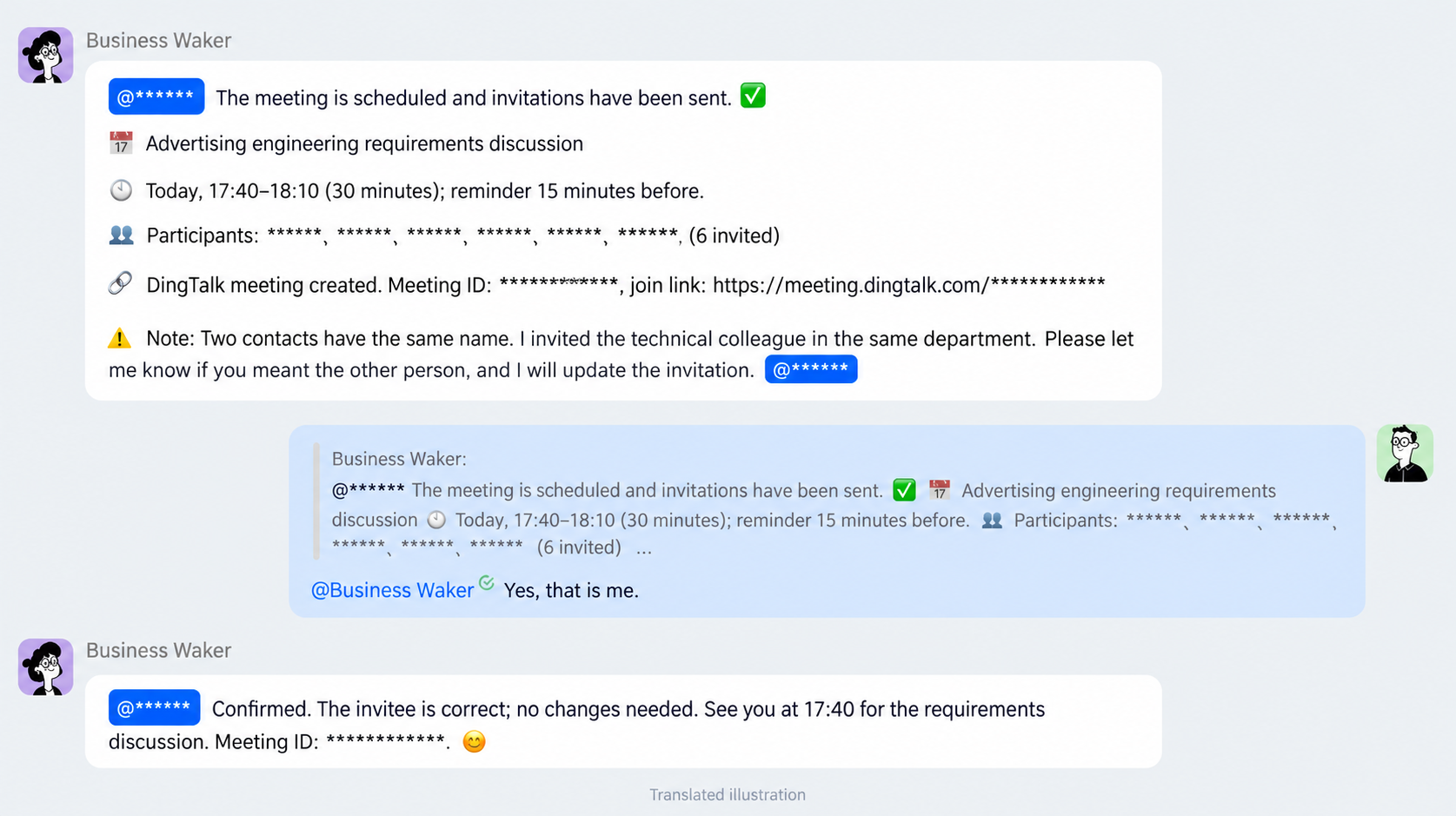
Using the requirements assessment, product materials, and open questions, Waker organized the meeting’s purpose, discussion topics, and points that needed joint confirmation. It then scheduled the meeting and shared the arrangements with the group.
Participants no longer had to start by restating the background. They could enter the meeting knowing how far the discussion had progressed, which questions had preliminary answers, and which still needed to be addressed together.
The meeting was more than a product demonstration: it was a discussion of the actual conditions for working together.
English translation of the source conversation, with participant and meeting details redacted.
Keep the work moving after the meeting
When the meeting ended, Waker stayed involved.
It prepared and shared meeting notes, recording the main discussion points, agreements, unresolved questions, and next actions.
The follow-up work became more specific:
- The team would provide additional version and deployment information.
- Both sides would further confirm API integration, runtime environments, and data persistence requirements and boundaries.
- Integration approaches for some specialist tools would undergo further validation.
- Subsequent technical questions would move into focused discussions and continued follow-up.