

A photographer wrote 150,000 lines of code with Qoder, independently delivering 3 commercial products in 5 months.
"This time last year, I still thought AI coding could only produce tool scripts for personal use—impossible to create a sellable product."
Youfeng, the Product Lead at Yueliu, has been working in the film and television industry for a decade. From cinematographer and colorist to technical producer, he has participated in countless projects, transitioned from user to product developer, and led the development of multiple products serving the film industry.
But one problem always troubled him: he had countless product ideas, yet the implementation process was always difficult and painful.
"I'm the product lead, but I completely depend on the team for coding. Sometimes a small feature takes weeks from requirement submission to launch. If I want to independently build something to validate an idea, there's simply no way to start quickly."
"The high cost of trial and error became the biggest constraint on product innovation."
It was early 2024, before the term "VibeCoding" even existed, when Youfeng first tried AI-assisted programming. He spent three days using ChatGPT through conversation to complete a small desktop application, achieving the expected functionality, but the experience left him somewhat frustrated.
"The feeling at the time was that it could make a demo, but it was far from a real commercial product. Code quality, architecture design, long-term maintenance—all were problems. So I didn't pursue it further."
The real change happened in September 2025.
"I was drawn by the tagline on the official website: 'An agentic programming platform for real-world software.'"
"After getting in touch with Qoder, I clearly felt the difference. This wasn't 'I ask, you answer'—it could truly understand project context, handle complex system development, and help me make architectural decisions."
Youfeng began investing significant time in practice. The intense novelty kept him immersed day and night, and he still maintains over 50 hours of VibeCoding time per week—almost equivalent to a full-time developer's workload.
"VibeCoding is truly addictive, especially for someone like me with many long-suppressed product ideas. You constantly receive positive feedback from it."
 One of Youfeng's proudest works is MetaStills—a still frame and metadata management tool for the film industry. But the true origin of this story lies in a specific scenario he observed among cinematographers.
"Cinematographers in their continuous creative work want to record, organize, and share highlight frames from their creations. In the industry, we typically use stills as the medium, but stills are different from ordinary photos—beyond the image itself, we also want to record and share the corresponding shooting metadata. There really lacked an effective tool for this."
It was a late night in May 2024. Youfeng was chatting with a friend. His friend's DIT team was creating daily shooting still reports for a well-known production. The traditional workflow was: DIT exports stills from color grading software → manually organizes metadata → layouts each image one by one → exports PDF to send to the director and cinematographer. The entire process took 3-4 hours every day.
"I thought at that moment: this could be completely automated. Although stills and metadata are distributed across multiple different software, as long as they're aggregated through standard interfaces into a dedicated still and metadata management software that can automatically extract, intelligently layout, and generate daily reports with one click—how much could efficiency improve?"
But the problem was: this had no relevance to the company's product ecosystem, and the development team had no resources to take on this new requirement. So Youfeng chose to collaborate with outsourced development to advance this product project, but the communication efficiency and delivery quality of outsourced collaboration always left him unsatisfied—until a year later—
"On the first day I installed Qoder, I realized: this time I could try it myself."
Youfeng opened Qoder and began his first "pure VibeCoding product build."
Day 1: From Product Documentation to Running Prototype
"I spent about 4 hours working with AI to reorganize a detailed Spec document. Product definition, user groups, core features, tech stack selection, even interface structure—all written in. Then I fed the Spec to AI and said: 'According to this, let's begin.'"
By the end of day one, a rough but usable prototype was running: it could import stills, import and manage metadata, auto-match, draw still frames, customize styles, and generate PDFs.
"That night I stared at the PDF on the screen, my hands were shaking. In just one short year, VibeCoding capabilities had become this terrifyingly powerful."
Day 2: The First "Crash" and Recovery
On day two, Youfeng wanted to add a feature—having AI automatically select the optimal layout based on still content. But problems came one after another.
"The interface AI wrote looked fine, no errors reported, but runtime response was always slow. I had AI add lots of debug logs before discovering it had added a bunch of fallback mechanisms trying to handle various edge cases. The result was increasingly complex code where bugs were completely 'caught' by fallback mechanisms, making them difficult to find."
Youfeng realized this was a classic trap of AI over-engineering.
"I stopped and told AI: 'Delete all fallbacks, let the problems surface.' Then we reorganized the feature flow from the source together, finding the real logic flaws. After fixing it, the code was actually cleaner."
This small episode led Youfeng to summarize an iron rule: No fallback design during development—let problems surface early, fail fast.
Day 3: From "Runs" to "Usable"
On day three, Youfeng sent the new version to his friend, starting internal team testing.
"The feedback was direct: 'The new version is obviously smoother and more beautiful than the previous version, with significantly improved stability and rendering performance—but there are some small issues when importing metadata; it failed to import Silverstack's metadata format.'"
Youfeng immediately adjusted direction. In the morning, he analyzed Silverstack's exchange file format with AI and fixed compatibility for multiple formats including Silverstack and DaVinci Resolve; in the afternoon, he even completely refactored the entire metadata feature, implementing a metadata matching system that could customize metadata exchange specifications. This iteration efficiency was something Youfeng had never experienced in his previous product work.
"Comparing the progress efficiency of those two days, my previous work felt like a complete waste of time."
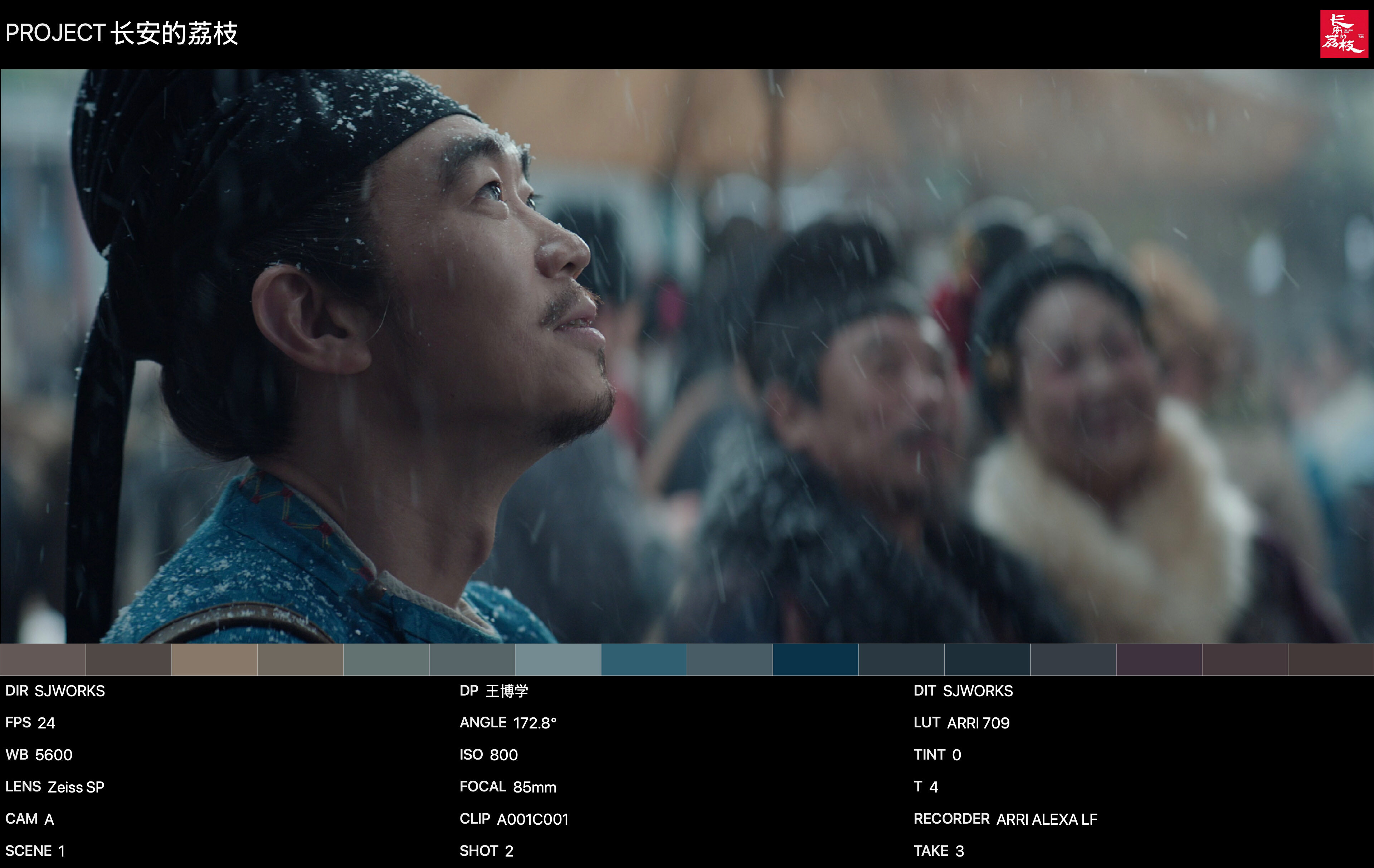
72 hours after starting development, the brand-new pure VibeCoding version of MetaStills went into trial use on the set of "Chang'an's Lychees" (a Chinese film production).
One of Youfeng's proudest works is MetaStills—a still frame and metadata management tool for the film industry. But the true origin of this story lies in a specific scenario he observed among cinematographers.
"Cinematographers in their continuous creative work want to record, organize, and share highlight frames from their creations. In the industry, we typically use stills as the medium, but stills are different from ordinary photos—beyond the image itself, we also want to record and share the corresponding shooting metadata. There really lacked an effective tool for this."
It was a late night in May 2024. Youfeng was chatting with a friend. His friend's DIT team was creating daily shooting still reports for a well-known production. The traditional workflow was: DIT exports stills from color grading software → manually organizes metadata → layouts each image one by one → exports PDF to send to the director and cinematographer. The entire process took 3-4 hours every day.
"I thought at that moment: this could be completely automated. Although stills and metadata are distributed across multiple different software, as long as they're aggregated through standard interfaces into a dedicated still and metadata management software that can automatically extract, intelligently layout, and generate daily reports with one click—how much could efficiency improve?"
But the problem was: this had no relevance to the company's product ecosystem, and the development team had no resources to take on this new requirement. So Youfeng chose to collaborate with outsourced development to advance this product project, but the communication efficiency and delivery quality of outsourced collaboration always left him unsatisfied—until a year later—
"On the first day I installed Qoder, I realized: this time I could try it myself."
Youfeng opened Qoder and began his first "pure VibeCoding product build."
Day 1: From Product Documentation to Running Prototype
"I spent about 4 hours working with AI to reorganize a detailed Spec document. Product definition, user groups, core features, tech stack selection, even interface structure—all written in. Then I fed the Spec to AI and said: 'According to this, let's begin.'"
By the end of day one, a rough but usable prototype was running: it could import stills, import and manage metadata, auto-match, draw still frames, customize styles, and generate PDFs.
"That night I stared at the PDF on the screen, my hands were shaking. In just one short year, VibeCoding capabilities had become this terrifyingly powerful."
Day 2: The First "Crash" and Recovery
On day two, Youfeng wanted to add a feature—having AI automatically select the optimal layout based on still content. But problems came one after another.
"The interface AI wrote looked fine, no errors reported, but runtime response was always slow. I had AI add lots of debug logs before discovering it had added a bunch of fallback mechanisms trying to handle various edge cases. The result was increasingly complex code where bugs were completely 'caught' by fallback mechanisms, making them difficult to find."
Youfeng realized this was a classic trap of AI over-engineering.
"I stopped and told AI: 'Delete all fallbacks, let the problems surface.' Then we reorganized the feature flow from the source together, finding the real logic flaws. After fixing it, the code was actually cleaner."
This small episode led Youfeng to summarize an iron rule: No fallback design during development—let problems surface early, fail fast.
Day 3: From "Runs" to "Usable"
On day three, Youfeng sent the new version to his friend, starting internal team testing.
"The feedback was direct: 'The new version is obviously smoother and more beautiful than the previous version, with significantly improved stability and rendering performance—but there are some small issues when importing metadata; it failed to import Silverstack's metadata format.'"
Youfeng immediately adjusted direction. In the morning, he analyzed Silverstack's exchange file format with AI and fixed compatibility for multiple formats including Silverstack and DaVinci Resolve; in the afternoon, he even completely refactored the entire metadata feature, implementing a metadata matching system that could customize metadata exchange specifications. This iteration efficiency was something Youfeng had never experienced in his previous product work.
"Comparing the progress efficiency of those two days, my previous work felt like a complete waste of time."
72 hours after starting development, the brand-new pure VibeCoding version of MetaStills went into trial use on the set of "Chang'an's Lychees" (a Chinese film production).
Those 72 hours of intensity were just the beginning. Over the next five months, Youfeng maintained a stable high-frequency commit rate, continuously polishing MetaStills:

MetaStills is just the tip of the iceberg of Youfeng's VibeCoding practice. During the same period, he was also advancing numerous other projects:
Kuguan (Cool Manager), Yueliu's film equipment inventory management system. When Youfeng took over, the system already had version 1.0, but feature implementation was still incomplete with heavy technical debt. Through AI collaboration, he completed architecture refactoring, permission system fixes, and AI feature integration. 203 commits, 60,000 lines of code.
DEMAZE, Yueliu's AI-native media asset management system, developed from 0 to 1, involving complex technologies like Tauri desktop client, Rust backend, distributed file node services, and FUSE filesystem mounting. 234 commits, 60,000 lines of code.
Just these three projects alone: 510 commits, approximately 150,000 lines of code.
"I was quite surprised by this number myself. But looking back, it averages out to about 20 commits per week—as long as you maintain the rhythm, the accumulation becomes substantial."
Youfeng's VibeCoding journey was not all smooth sailing.
He discovered that AI's context capability is essentially "depth rather than breadth"—it can precisely remember code implementation details, function signatures, variable naming; it can discover fine-grained correlations in variable passing paths and type definition locations at the code micro-level; it can maintain high consistency in naming conventions, code style, and API calling patterns.
Human advantage lies in "compressed breadth"—grasping the project's overall architecture, module relationships, data flow, making macro judgments like whether architecture is reasonable and whether technology choices are appropriate. This "fuzzy global sense" is exactly what AI lacks. "After finding this division of labor boundary, efficiency improved significantly."
Another breakthrough was DevOps. "Honestly, I didn't even know what Jenkins and K8s were for before. The Kuguan system has multiple environments like SIT and FAT. I just directly asked AI: 'I want to deploy to the SIT environment, what should I do?'"
AI told him what to do next, and he executed. When encountering errors, he would paste the error messages to AI, and AI would help locate problems and provide solutions. Under AI's guidance, he completed environment configuration (understanding the differences and purposes of SIT and FAT environments), Jenkins build task configuration, K8s Deployment and Service understanding, Docker configuration optimization, and more.
Youfeng also summarized AI collaboration strategies for different development phases:
"In the 0-to-1 phase, like MetaStills, the goal is to quickly validate core assumptions. Code style should be aggressive, concise, disposable. Explicitly tell AI: no fallback mechanisms needed, no backward compatibility needed, focus on core features and cut edge cases, clear skeleton takes priority over detailed flesh."
"In the continuous iteration phase, like Kuguan, the goal is stability, maintainability, extensibility. Code style should be robust and standardized. Requirements for AI change: consider backward compatibility but don't over-engineer, complete error handling, code refactoring and optimization, technical debt cleanup."
"Different phases require different things from AI."
Today, Youfeng is simultaneously advancing multiple projects: two software products under Yueliu, his own independent products, and third-party collaboration products. All code is completed through AI collaboration.
"My mindset has completely changed. Before, when I had a product idea, my first reaction was 'How many development resources will this need, how long will it take to schedule?' Now my first reaction is 'Let me build it overnight to validate it first.' This feeling of greatly shortened path from idea to implementation is the most satisfying part."
Youfeng's story might offer some inspiration to people with similar backgrounds:
You don't need to become a programmer first before you can start. "I started from zero, with no computer science background. VibeCoding's barrier to entry is much lower than traditional programming. The key is to start hands-on and learn through practice."
Treat AI as a "hands-on teaching mentor." "Ask when you don't understand, paste error messages to it. It's so much more efficient than reading documentation or searching Stack Overflow."
Find the division of labor boundary between humans and AI. "Don't compete with AI on remembering details, and don't let AI make architectural decisions for you. Each plays to their strengths—that's when collaboration efficiency is highest."
"A year ago, I thought AI programming was a toy. Now I can't live without it. Not because it replaced me, but because it finally enabled me to independently complete those product ideas I've longed for so long."
—Youfeng, Product Lead at Yueliu, Independent Developer
The Pre-Agent Era: Barely Adequate, But Not Truly Useful
It was early 2024, before the term "VibeCoding" even existed, when Youfeng first tried AI-assisted programming. He spent three days using ChatGPT through conversation to complete a small desktop application, achieving the expected functionality, but the experience left him somewhat frustrated.
"The feeling at the time was that it could make a demo, but it was far from a real commercial product. Code quality, architecture design, long-term maintenance—all were problems. So I didn't pursue it further."
The Turning Point: Encountering the Agentic IDE
The real change happened in September 2025.
"I was drawn by the tagline on the official website: 'An agentic programming platform for real-world software.'"
"After getting in touch with Qoder, I clearly felt the difference. This wasn't 'I ask, you answer'—it could truly understand project context, handle complex system development, and help me make architectural decisions."
Youfeng began investing significant time in practice. The intense novelty kept him immersed day and night, and he still maintains over 50 hours of VibeCoding time per week—almost equivalent to a full-time developer's workload.
"VibeCoding is truly addictive, especially for someone like me with many long-suppressed product ideas. You constantly receive positive feedback from it."
Typical Case: 72-Hour Rapid Delivery—MetaStills Pure VibeCoding Version Deployed on the Set of "Chang'an's Lychees"
From Prototype to Product: Five Months of Continuous Iteration
Those 72 hours of intensity were just the beginning. Over the next five months, Youfeng maintained a stable high-frequency commit rate, continuously polishing MetaStills:
- Design System: Established a complete Color Token system and component library
- Image Processing: Implemented HEIC async saving, end-to-end color management, HDR support, letterbox detection, smart cropping
- Cloud Services: Integrated iCloud sync, StoreKit subscription management
- External Integration: Developed HTTP API service, implemented DaVinci plugin
- Localization: Completed full Chinese-English localization