

Pupu Supermarket, together with Alibaba Cloud, held an enterprise-grade AI Coding workshop where 150+ developers put Qoder into hands-on practice.
Pupu Supermarket, in partnership with the Alibaba Cloud Training Center, held an enterprise-grade AI Coding workshop, where 150+ developers jointly explored new practices for landing intelligent programming in the enterprise.
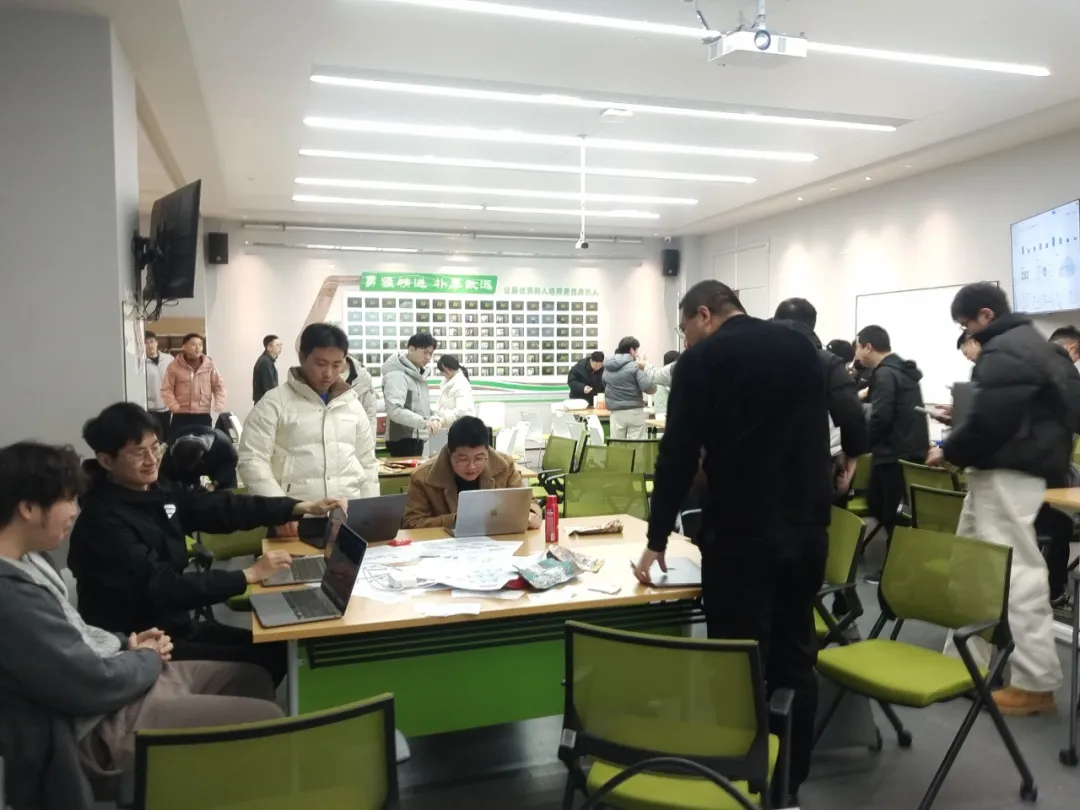 Pupu Technology, together with the Alibaba Cloud Training Center, successfully held a dedicated "Enterprise-Grade AI Coding" workshop. More than 50 core developers gathered in Fuzhou on-site, with 100+ participants joining online simultaneously, together exploring the AI-driven upgrade of enterprise-grade development paradigms.
This training was led by Lyu Zhaobo, a Qoder Ambassador and technical instructor at the Alibaba Cloud Training Center. Aimed at Pupu's Java development team, it covered the full software development lifecycle (SDLC)—from project scanning and requirements design to coding implementation, testing and validation, and deployment and operations. Through Qoder-based Hands-on Lab exercises, it helped participants master enterprise-grade AI Coding best practices.
Pupu Technology, together with the Alibaba Cloud Training Center, successfully held a dedicated "Enterprise-Grade AI Coding" workshop. More than 50 core developers gathered in Fuzhou on-site, with 100+ participants joining online simultaneously, together exploring the AI-driven upgrade of enterprise-grade development paradigms.
This training was led by Lyu Zhaobo, a Qoder Ambassador and technical instructor at the Alibaba Cloud Training Center. Aimed at Pupu's Java development team, it covered the full software development lifecycle (SDLC)—from project scanning and requirements design to coding implementation, testing and validation, and deployment and operations. Through Qoder-based Hands-on Lab exercises, it helped participants master enterprise-grade AI Coding best practices.
The training deployed a Hands-on Lab Dashboard experiment map on-site, where participants submitted experiment screenshots in groups and the big screen displayed each group's progress in real time. A total of 232 experiment records were generated during the training, with participants' names forming a word cloud scrolling in real time—data-driven, with visible results.
"We already use AI tools like Copilot in our daily work, and this training showed us the complete paradigm of enterprise-grade AI Coding," said one participant. "It's not just about writing code—it's an upgrade of development thinking."
 Pupu's development team already had a basic understanding of AI Coding tools, and this training focused on three core upgrade directions:
● Individual efficiency → team enablement: Qoder's Skills mechanism makes SOP workflows encapsulable, reusable, and transferable, achieving team-level capability precipitation
● Code completion → programming prediction: millisecond-level response, context awareness, and multi-line prediction—moving from passive response to proactive anticipation
● 0-to-1 scenarios → legacy project maintenance: Repo Wiki lets AI understand historical code, cracking the real enterprise pain point of "taking over legacy projects"
The training also released a four-step path for landing enterprise AI Coding: MCP configuration to connect the foundational tool layer → Rules to inject enterprise coding conventions → Repo Wiki to let AI understand the codebase → Skills to encapsulate and automate SOP workflows, ultimately building an enterprise-exclusive AI Agent that "understands you + understands the codebase + understands history + understands the process."
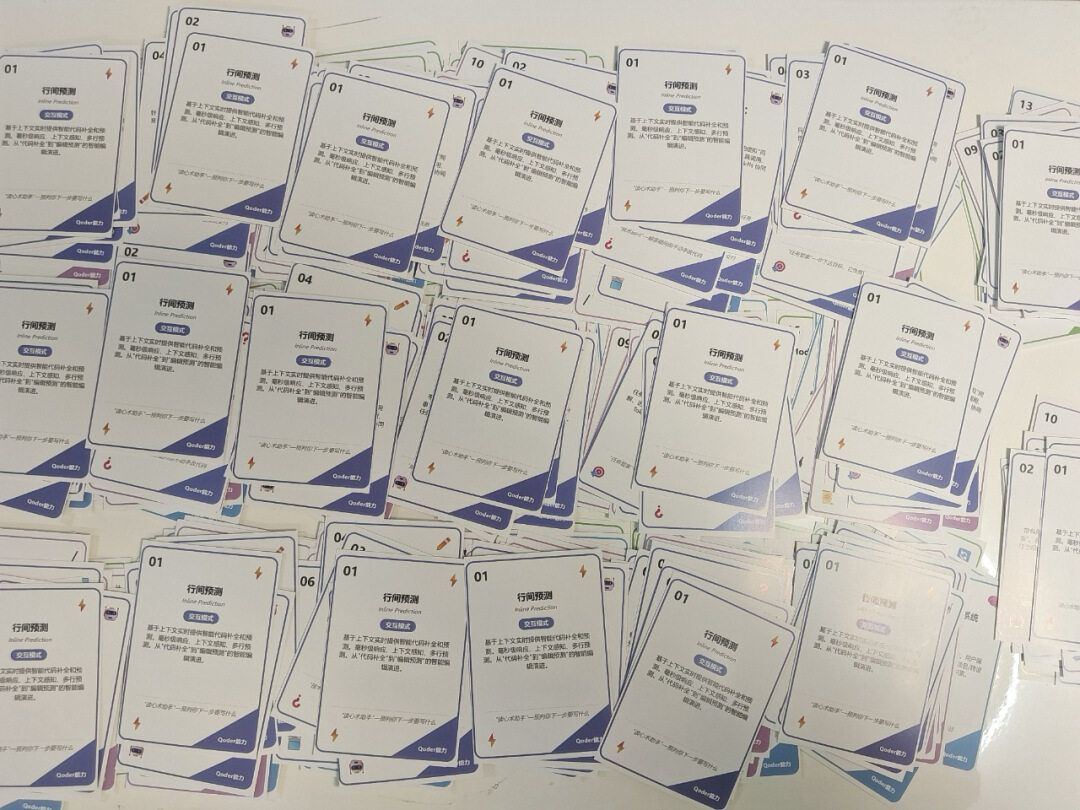
For this course, we customized 13+ design pattern cards based on the enterprise's current state—such as legacy-project scan mode, Quest delegation mode, and inline prediction—turning abstract AI Coding methodology into reusable, hands-on tools. Participants learned while practicing and mastered the best practices on the spot.
Pupu's development team already had a basic understanding of AI Coding tools, and this training focused on three core upgrade directions:
● Individual efficiency → team enablement: Qoder's Skills mechanism makes SOP workflows encapsulable, reusable, and transferable, achieving team-level capability precipitation
● Code completion → programming prediction: millisecond-level response, context awareness, and multi-line prediction—moving from passive response to proactive anticipation
● 0-to-1 scenarios → legacy project maintenance: Repo Wiki lets AI understand historical code, cracking the real enterprise pain point of "taking over legacy projects"
The training also released a four-step path for landing enterprise AI Coding: MCP configuration to connect the foundational tool layer → Rules to inject enterprise coding conventions → Repo Wiki to let AI understand the codebase → Skills to encapsulate and automate SOP workflows, ultimately building an enterprise-exclusive AI Agent that "understands you + understands the codebase + understands history + understands the process."
For this course, we customized 13+ design pattern cards based on the enterprise's current state—such as legacy-project scan mode, Quest delegation mode, and inline prediction—turning abstract AI Coding methodology into reusable, hands-on tools. Participants learned while practicing and mastered the best practices on the spot.
Experiment-Driven, with Visible Data
The training deployed a Hands-on Lab Dashboard experiment map on-site, where participants submitted experiment screenshots in groups and the big screen displayed each group's progress in real time. A total of 232 experiment records were generated during the training, with participants' names forming a word cloud scrolling in real time—data-driven, with visible results.
"We already use AI tools like Copilot in our daily work, and this training showed us the complete paradigm of enterprise-grade AI Coding," said one participant. "It's not just about writing code—it's an upgrade of development thinking."
From Tool Upgrade to Methodology Upgrade